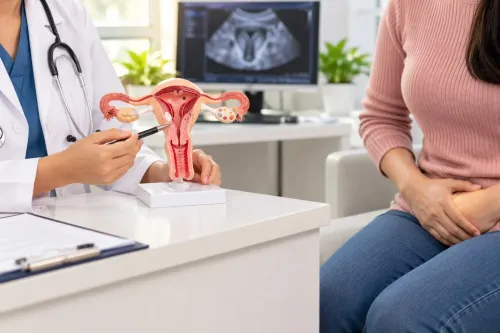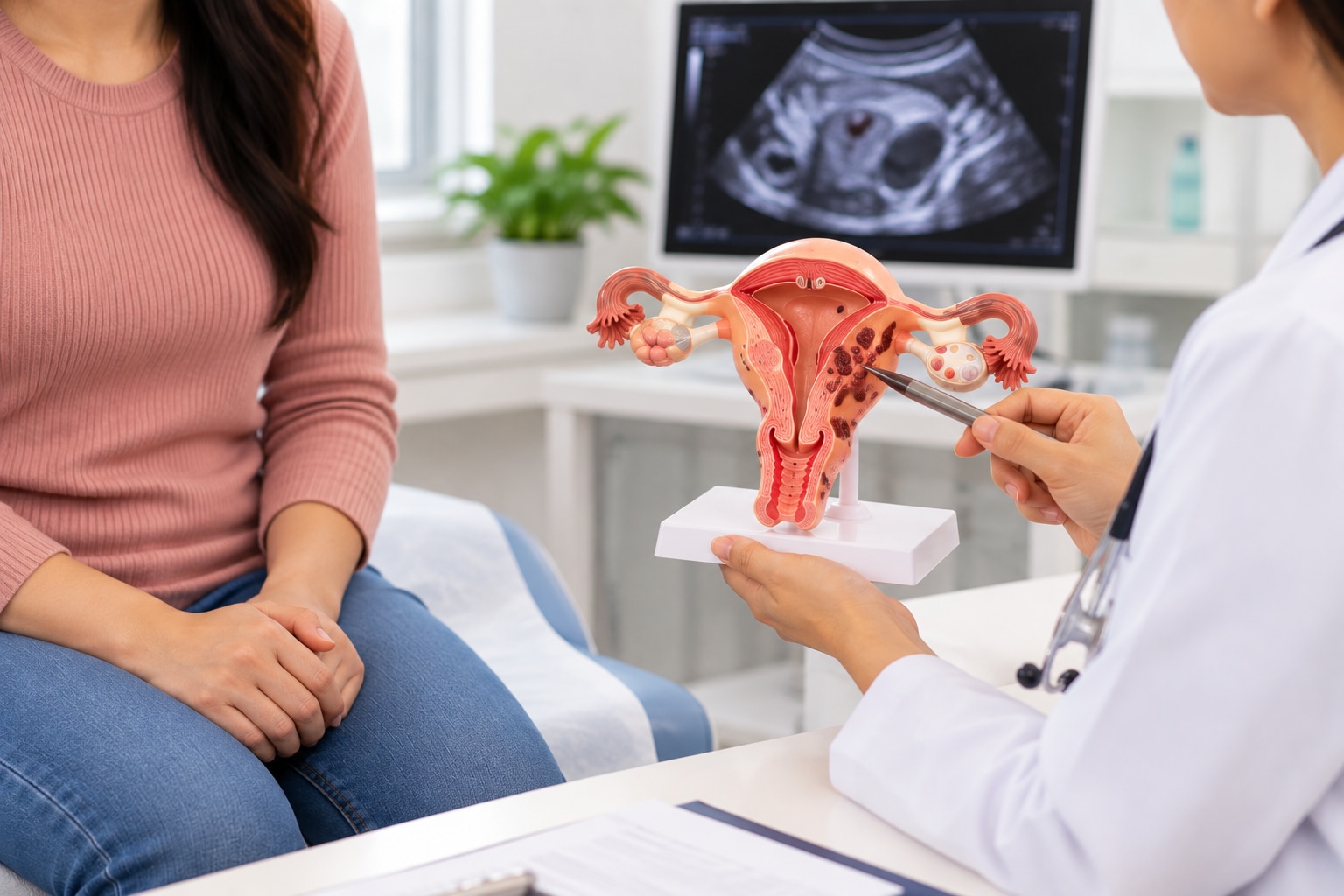
A first visit for suspected endometriosis should do more than confirm whether a scan shows a cyst. You should leave with a documented symptom pattern, an examination and testing plan, a treatment goal, and a clear next step for pain relief, pregnancy planning, or specialist referral.
Key takeaways
- Your first visit covers pain, bleeding, fertility goals, medical history and previous treatments.
- Ultrasound and pelvic examination help assess symptoms; a normal scan does not rule out endometriosis.
- Treatment choices depend on pain, side effects, fertility plans and whether pregnancy is a current goal.
- Laparoscopy, fertility care or specialist referral enters the plan when symptoms or test findings require it.
What the first endometriosis consultation covers
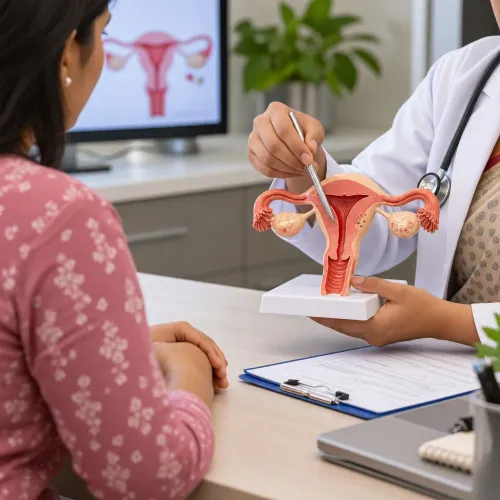
The answer to what does endometriosis treatment for include in thane starts with a detailed history and shared decision-making, not surgery by default. An endometriosis doctor in Thane needs to understand your symptoms, health history, and reproductive plans before recommending treatment.
1. Record the symptom pattern: when pelvic pain begins in relation to menstruation; whether periods are painful or unusually heavy; pain during sex; bowel pain or painful bowel movements; bladder pain or urinary frequency; bleeding between periods; fatigue; missed work; and effects on exercise, sleep, relationships, and daily activities.
2. Review previous care: pelvic or abdominal surgery, prior scans, medicines already tried, pregnancies, miscarriages, contraception, and how soon you want to conceive. Bring scan reports, medicine names and doses, and a record of pain and bleeding days.
3. Have a pelvic examination when appropriate. Tenderness, restricted movement, an ovarian enlargement, or nodules can guide the next step, but a normal examination does not rule out endometriosis.
Your goal changes the plan. Pain control, reducing bleeding, preserving ovarian function, trying for pregnancy, and preventing symptoms while pregnancy is not immediately desired require different choices. Hormonal suppression may control symptoms when you are avoiding pregnancy, but it is not fertility treatment; conception needs a separate fertility assessment and plan.
Which examinations and tests can be part of the work-up
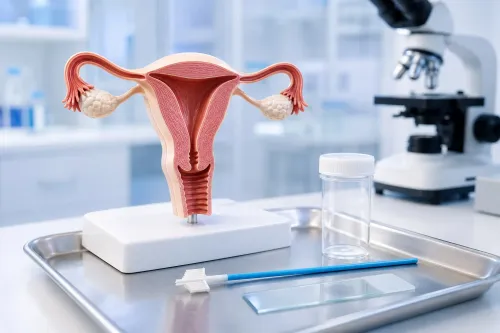
After the history, the clinician may perform a pelvic examination and arrange a transvaginal ultrasound, even when the examination is normal. Ultrasound can identify an ovarian endometrioma and, when performed by an experienced operator, may show deep endometriosis. A normal examination or scan does not exclude superficial lesions or all endometriosis.
| Test | What it can show | Its limit |
|---|---|---|
| Transvaginal ultrasound | Ovarian endometrioma and some deep disease | A normal scan cannot rule out superficial lesions |
| Pelvic MRI | The extent of suspected deep disease affecting the bowel, bladder, ureter, or other structures | It can miss disease and is not required for every patient; its detailed map mainly supports treatment and surgical planning |
| Blood tests | Anaemia from heavy menstrual bleeding, when a blood count is indicated | CA-125 is not a stand-alone diagnostic test: an elevated result is not specific, and a normal result does not exclude endometriosis |
| Diagnostic laparoscopy | Direct inspection of the pelvis; the surgeon may remove tissue for histology | It is invasive and is not automatically required before treatment |
Laparoscopy enters the discussion when imaging is negative or unsuitable and empirical treatment has failed, is unsuitable, or is declined. The decision should reflect pain, fertility plans, surgical risks, and what the result would change.
This is why endometriosis treatment in Thane should use test results alongside symptoms rather than treating one scan as a final answer.
How doctors match medicines to your symptoms and pregnancy plans
Pain relief and pregnancy planning are separate treatment goals, so your prescription depends on which problem needs attention now. For pain, a doctor may discuss an NSAID such as ibuprofen or naproxen. The plan should state the dose, timing, maximum duration, and warning signs involving stomach bleeding or kidney problems.
An NSAID may be unsuitable if you have:
- A stomach ulcer or previous gastrointestinal bleeding
- Kidney disease
- An NSAID allergy or asthma triggered by these medicines
- Blood-thinner treatment
- Another medicine or condition that creates a contraindication
Hormonal treatment can reduce pain by suppressing ovulation or menstrual bleeding. Combined hormonal contraception or a progestogen may be considered, but the choice is affected by:
- Side effects and your personal preference
- Migraine with aura
- Blood-clot risk
- High blood pressure
- Liver disease
If first-line options fail or cause unacceptable effects, a specialist may consider a GnRH agonist or antagonist. Discuss hot flushes, mood changes, vaginal dryness, bone-density loss, treatment duration, and whether add-back hormone therapy is appropriate.
Hormonal suppression is not fertility treatment. You cannot use it to achieve pregnancy while its contraceptive or ovulation-suppressing effect is active. Trying to conceive, pregnancy, breastfeeding, or a relevant medical history requires a different plan, including separate fertility assessment when you see an endometriosis doctor in Thane.
Endometriosis treatment in Thane should match symptom control with your reproductive timeline, not treat every patient with the same medicine.
When laparoscopy, fertility care, or referral enters the plan
When medicines do not control pain, or endometriosis affects conception, an endometriosis care clinic in Thane should move from symptom control to a fertility-sensitive decision—not automatically to surgery.
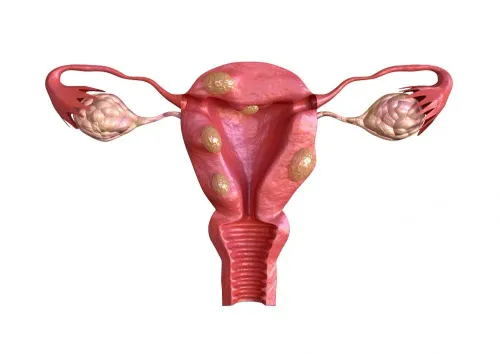
1. Review the treatment failure. Ask which medicines were tried, at what dose and for how long, and whether pain, bleeding, bowel symptoms, sexual pain, or daily functioning improved. Laparoscopy may excise or ablate visible lesions and divide adhesions when appropriate, but it is not a guaranteed cure; pain or lesions can return.
2. Assess an ovarian endometrioma before removing it. Discuss its size and appearance, pain, previous operations, age, ovarian-reserve results, and plans for pregnancy or assisted reproduction. Endometrioma surgery can reduce ovarian reserve, particularly after bilateral or repeated operations, so cyst removal is not automatic.
3. Match fertility priorities to the least harmful effective route. Options include expectant management, selected surgery, ovulation induction, or IVF. Surgery before assisted reproduction is not routinely recommended solely to improve live-birth rates, especially when ovarian reserve is at risk.
4. Refer complex disease early. Endometriosis involving the bowel, bladder, or ureter may require an endometriosis specialist with colorectal, urology, or other surgical teams.
5. Build a review date into endometriosis treatment in Thane. One scan cannot show every superficial lesion, and one operation cannot define future care; symptoms, fertility goals, ovarian reserve, and recurrence can change the next step.
What follow-up should look like at a Thane endometriosis clinic
Follow-up should produce a dated plan, not indefinite medication or an automatic operation. Ask when to return, which symptoms need earlier contact, and how recurrence or a new endometrioma will be assessed. An endometriosis doctor in Thane should compare your current function with baseline, not rely only on a scan.
- Record pain days, bleeding, bowel symptoms, bladder symptoms, sexual pain, fatigue, missed work, and daily activities.
- Review medicine side effects and check blood pressure or other safety measures when relevant.
- Revisit pregnancy plans, contraception, ovarian-reserve concerns, and the next treatment decision if first-line care fails.
- Confirm whether repeat transvaginal ultrasound, pelvic MRI, or laparoscopy is indicated, and who reviews the images.
- Ask how fertility referral and multidisciplinary care will work if disease involves the bowel, bladder, ureter, or another organ.
| Question | What continuity of care should clarify |
|---|---|
| Who reviews imaging? | An experienced clinician interprets ultrasound or MRI and explains its limits. |
| Could surgery affect fertility? | Ovarian-reserve counselling covers endometrioma surgery, especially after bilateral or repeat operations. |
| What happens after treatment fails? | The clinic sets a review date and names the next option, referral, or diagnostic step. |
| Who receives a referral? | A fertility specialist, colorectal surgeon, urologist, or endometriosis team is identified when needed. |
An endometriosis care clinic in Thane should answer these questions clearly. Readers discussing evaluation with Dr. Madhura Chandavarkar at Dr. Chandavakar's Apeksha Maternity & Nursing Home can use them to judge whether follow-up is coordinated rather than episodic.
Related service
Endometriosis Treatment Dr. Madhura Chandavarkar at Apeksha Maternity and Nursing Home provides expert care for women suffering from endometriosis, a condition where tissue... View service → |
Frequently asked questions
What does the first endometriosis consultation in Thane cover?
The doctor reviews your pain pattern, periods, bleeding, bowel or bladder symptoms, medical history, previous treatments and pregnancy plans before discussing options.
Which tests can be part of an endometriosis work-up?
The work-up can include a pelvic examination, ultrasound and other tests selected according to your symptoms. A normal scan does not rule out endometriosis.
How are endometriosis medicines matched to pregnancy plans?
Doctors consider your main symptoms, treatment risks, previous response and whether you are trying to conceive now, later or not at all.
When does laparoscopy or fertility care enter the treatment plan?
Laparoscopy, fertility support or referral enters the plan when symptoms persist, imaging raises concern, medicines do not help, or pregnancy requires additional evaluation.
Keywords